Ask ten short-term rental hosts how much they spent furnishing their property and you’ll get ten very different answers. Ask them how much they should have spent, and most will pause.
Furniture is one of the most significant upfront costs in launching an STR, and one of the least discussed. Most hosts wing it. They over-invest in rooms guests barely enter, under-invest in the bed that drives their review score, and have no plan for what happens when things wear out.
In this episode of Short-Term Rental Richest podcast, Tim, CEO of Corzly, shares his full furniture breakdown from a recent Orlando property, $40,983 in total startup costs, category by category, along with the framework he now uses for every new property.
The $10–17 Per Square Foot Formula
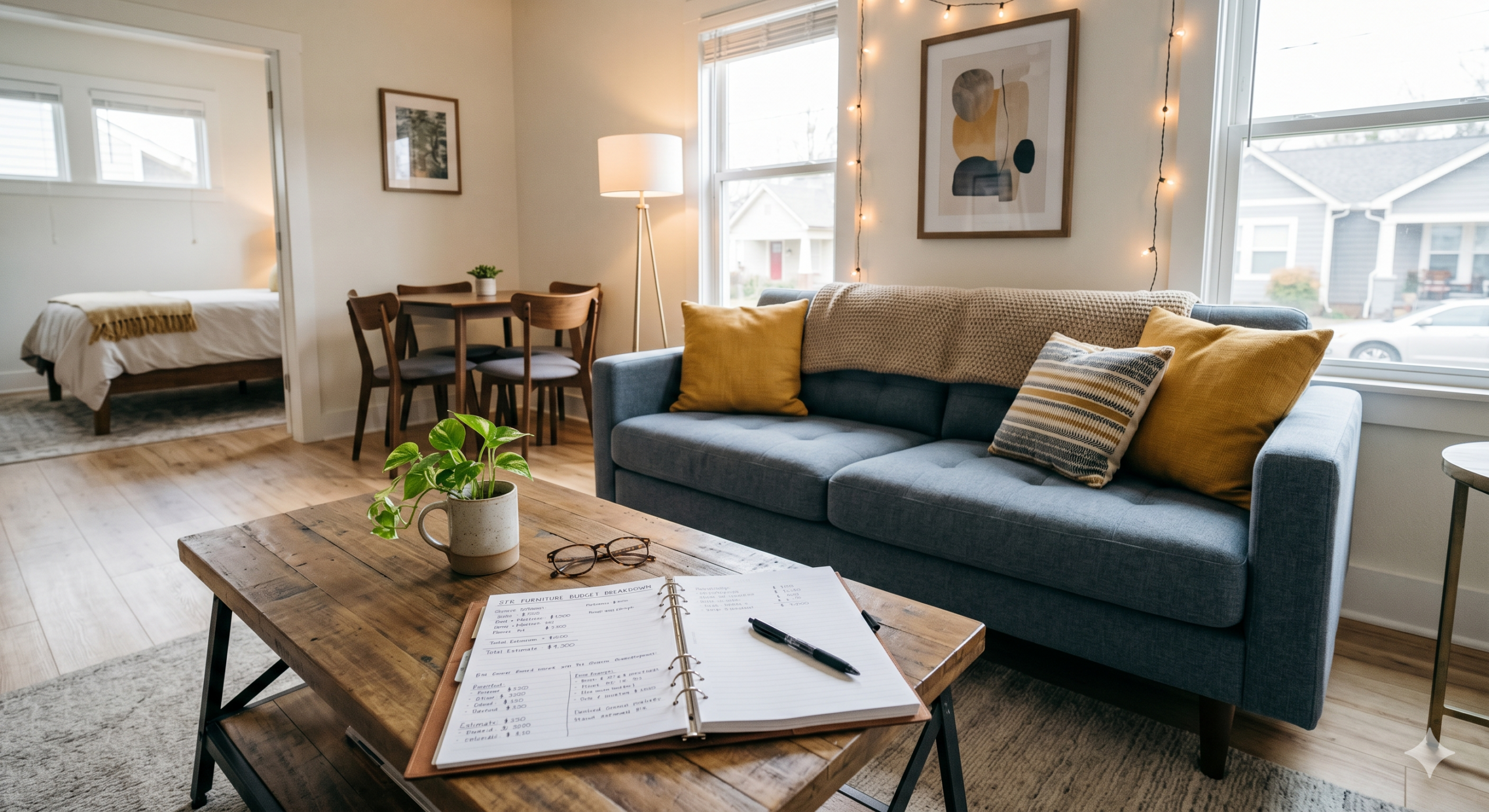
The simplest way to estimate a furniture budget for a new STR: multiply your property’s square footage by $10–17, depending on your market and desired finish level. For most properties, $12/sqft is a solid starting point for new furniture.
Tim’s Orlando property, a 4-bed, 2-bath home at 1,625 sqft near Disney, came in at roughly $12/sqft for furniture and decor alone ($18,903). Add linens, startup supplies, and renovations and the total reached $40,983.
Here’s the full breakdown by category:
- Furniture & Decor: $18,903 (46%)
- Renovations & Improvements: $18,028 (44%)
- Linens — 3 sets of everything: $2,375 (6%)
- Startup Cleaning & Consumables: $1,676 (4%)
- Grand Total: $40,983
That number isn’t a goal or a warning. It’s a data point. And knowing your number before you start is what separates a smart investment from an expensive guess.
Where to Splurge, Where to Save
Not all furniture dollars are created equal. The items that guests notice, and review, are not the same items that catch your eye in a showroom.
Always splurge on: Beds, mattresses, and sofas. These are directly tied to your review scores. A guest who sleeps badly or sits on an uncomfortable sofa will say so, publicly. There is no shortcut here.
Save here: Décor, artwork, and accent pieces. Wayfair, TJ Maxx, and Facebook Marketplace are your friends. Tim’s example: a custom accent wall at $850 versus the same look from Amazon for $150, plus installation at $750 versus $250. Guests didn’t know the difference. The savings were nearly $1,100 on a single wall.
Mid-range is fine for: Dining tables, dressers, and nightstands. Guests almost never comment on these in reviews. Spend reasonably and move on.
Don’t forget: Outdoor furniture. Most hosts overlook it entirely, and then wonder why their outdoor space doesn’t appear in listing photos or reviews. Budget for it from the start.
The Linen Rule
Buy three sets of everything, three sets of sheets per bed, three sets of towels per bathroom. This isn’t a luxury; it’s an operational necessity. It protects your turnovers, your laundry cycle, and your review scores when something inevitably goes wrong between checkouts.
Tim’s linen spend on a 6-bed property: $2,374, roughly 5.8% of total startup costs. Budget 5–8% of your furniture spend for linens as a baseline.
The Furnishing Timeline
Most hosts underestimate how long furnishing takes. The realistic timeline from end of renovations to first booking: 2–10 weeks, depending on property size and complexity.
The sequence matters:
- Renovations first — nothing gets ordered until the space is ready
- Floor plan and furniture list — measure every room, map the space before ordering anything
- Place orders 2-4 weeks early — account for shipping delays, damaged items, and wrong orders
- Assembly and installation week — expect 3–5 full days for a 3–4 bedroom property
- Styling, staging, and finishing touches — add décor, stock the kitchen, do a full walkthrough as a guest
- Photography — schedule right after staging; listings go live within days after photos are delivered
One often-overlooked detail: cardboard. A fully furnished 4-bedroom property generates a shocking amount of packaging waste. Know your bulk trash schedule before the boxes arrive — it’s one of those things nobody warns you about.
Every day the property sits empty is revenue you’re not recovering. Build your timeline backwards from your target launch date.
Planning Your Refresh Cycle
Furniture isn’t a one-time cost. Budget 5–10% of annual gross revenue each year for replacements, repairs, and upgrades, and build that into your financial model from day one.
Use AI to help. Scan your receipts into a folder, hand them to an AI tool like Claude or ChatGPT, and let it calculate your depreciation schedule. It takes minutes and can save significant money at tax time. Document every furniture cost per property meticulously, it’s critical for accurate tax deductions and depreciation write-offs.
The Bottom Line
Smart furnishing isn’t about spending more. It’s about spending in the right places, and tracking every dollar so your business runs cleanly, reviews stay strong, and the property pays for itself.
Whether you’re furnishing your first property or your fifteenth, the framework is the same: know your avatar, budget by sqft, splurge where it matters, save where it doesn’t, and plan your refresh before you need it.
Want help setting up your STR for long-term performance? The team at Corzly manages properties across multiple markets and helps operators build the systems that drive results. Reach out at here.
This article was inspired by THIS EPISODE of the Short-Term Rental Richest podcast.